Plaid Trust Index Score: Glide Guidance
Last updated: September 23, 2026
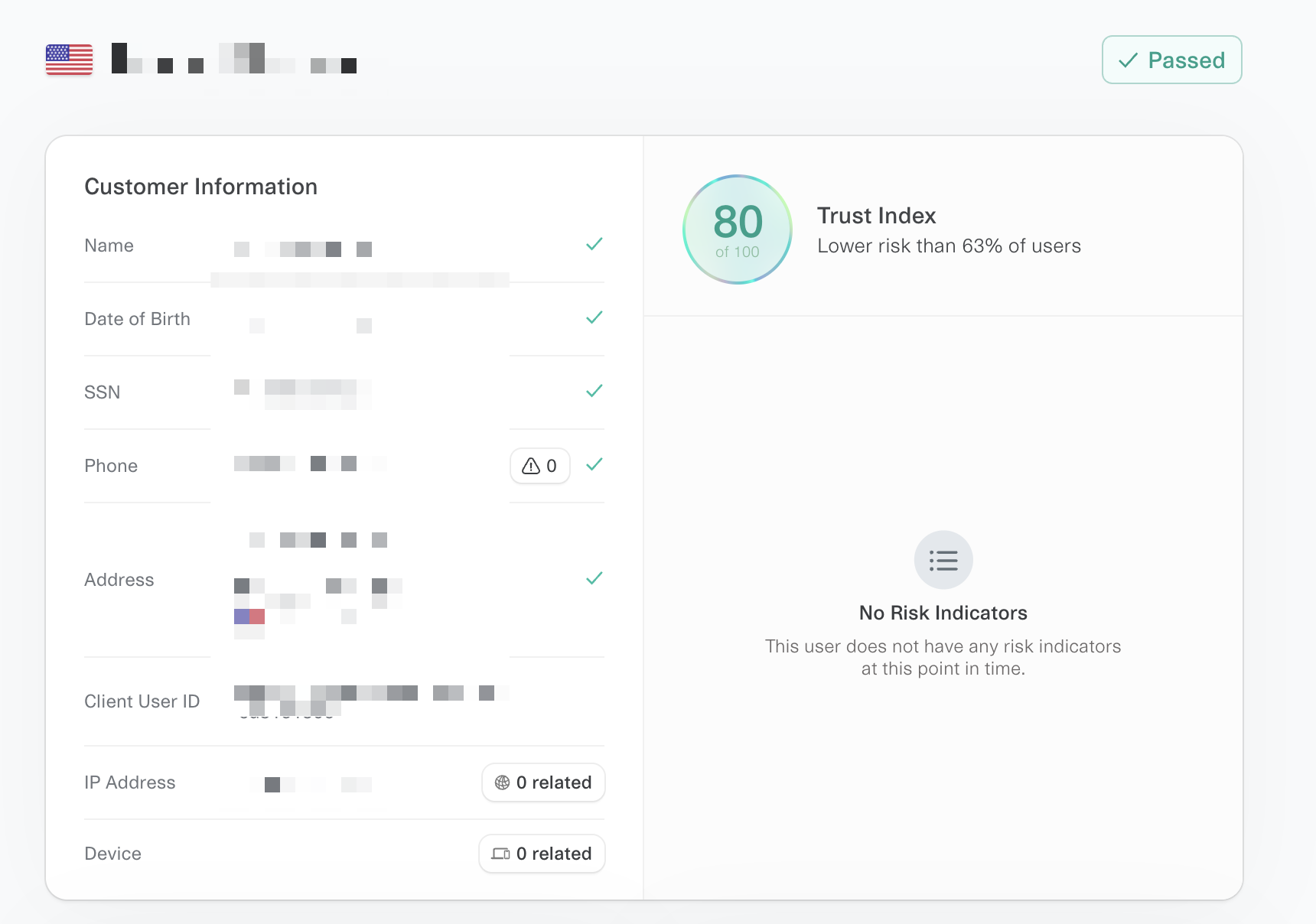
The Plaid Trust Index is a fraud risk score built into Plaid's identity verification process. It combines signals from device behavior, account history, and identity data into a single number, giving staff a quick read on applicant risk.
Important: The Trust Index is a supplementary signal — it should inform staff judgment but should never be the sole basis for approving or denying an application. Always review it alongside document verification, KYC checks, and other context.
Lower scores = higher risk. Higher scores = lower risk.
The score updates in real time as the applicant moves through verification.
What Goes Into the Score
Signal Type | What It Looks At |
Network behavior | High-velocity account linking, repeated login failures, known fraud patterns |
Bank account history | Account age, recent contact-info changes, historical usage |
Identity signals | Document verification, selfie checks, name/address/SSN match |
Cross-customer fraud data | Fraud signals shared from other FIs on the Plaid network |
The current model (Ti2, October 2025) also incorporates transaction history and live graph analysis to detect account takeovers, synthetic identities, and coordinated fraud rings.
How to Read the Score
Score Range | Risk Level | Recommended Action |
70–100 | Lower risk | Consider for streamlined approval alongside other passing checks |
40–70 | Moderate risk | Route to manual review; examine flagged signals |
0–40 | Higher risk | Escalate for thorough review; do not approve on score alone |
Plaid also shows a risk percentile (e.g., "84% riskier than other users") to contextualize the score against the broader verification population.
Note: Thresholds should be calibrated to your FI's applicant population and risk tolerance. A score of 28 for a young applicant with a thin digital footprint is very different from a 28 for an applicant with active fraud signals.
Known Limitations and Edge Cases
Low score with no specific risk factors shown
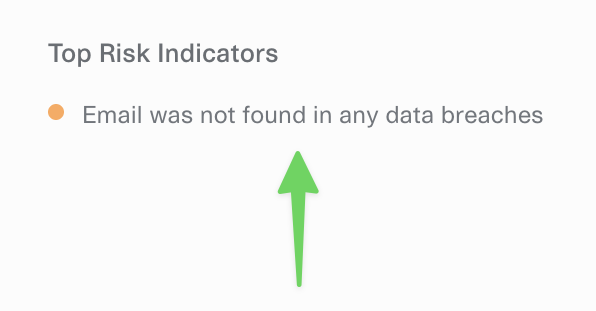
An applicant may receive a low score but the only visible flag is something minor like "Email Not Found in Any Data Breaches." The score reflects many signals beyond what's displayed — network and device-level inputs are factored in but not always surfaced as reason codes. Open the full session in Plaid's dashboard for the complete breakdown. If all other verification signals are clean, the score alone is not sufficient reason to deny.
Low score for young or thin-file applicants
Applicants with limited digital history may score low simply because there isn't enough data to establish trustworthiness — not because fraud is present. If the applicant passed document verification and selfie checks and their identity data matches, the low score likely reflects thin data rather than fraud. Weight other signals more heavily in these cases.
Score doesn't match the visible flags
An applicant might have a score of 65 with no visible risk factors, or a 31 with only a minor email flag. Visible reason codes are a summary, not the full picture. The model incorporates additional signals that are intentionally not surfaced. Always use "Open in Plaid" to view the complete breakdown before making a decision.
Document verification passed but score is still low
Document verification and the Trust Index are separate checks. A passing document check means the document appeared authentic — it does not account for network-level signals or whether the identity has been used across multiple accounts. If a document check passed but the Trust Index is low, treat the application as higher risk and review the full session.
High risk percentile with a moderate score
An applicant may show a score of 65 but be flagged as "84% riskier than other users." The percentile compares against everyone who has gone through Plaid IDV — a very broad population. A middling score can still represent elevated risk relative to a typical session. Read the percentile alongside the score, not instead of it.
Branch staff photographing multiple IDs from the same device
When associates photograph multiple applicants' IDs on the same branch device, the Trust Index may flag this as suspicious — even when the branch IP address has been configured to be ignored. Multiple ID captures from a single device in a short window can resemble fraud ring patterns, and the IP whitelist does not appear to fully suppress device-level signals.
If your FI uses branch-assisted applications, affected applicants may receive artificially low scores as a result. Staff should note the in-branch context when reviewing these sessions and not treat the low score as indicative of applicant fraud. This is an active issue — if you observe this pattern, flag the affected sessions and report them to your support contact.
How to Use the Trust Index in Practice
Check the score and percentile in the Fraud & KYC tab.
Review visible flags — treat them as starting points, not the full story.
Open the full session in Plaid for any score below your review threshold or anything that looks off.
Cross-reference other checks — document verification, selfie, KYC match, and watchlist screening.
Apply context — consider applicant age, relationship to the FI, and in-branch vs. online application.
What the Trust Index Cannot Tell You
Whether a fraudulent document is real — a high-quality fake can pass document verification
Whether a real person is being impersonated — stolen identity details may still match records cleanly
The specific reason behind a low score — it is a signal to investigate, not a fraud determination
Whether a thin-file applicant is actually risky — new or young applicants may score low through no fault of their own