Plaid Trust Index
Last updated: September 17, 2025
Overview
Plaid’s Trust Index is a real-time score that helps financial institutions assess the overall trustworthiness of a user during the identity verification (IDV) process. The score ranges from 0 to 100, where lower scores indicate higher risk.
What is the Trust Index?
The Trust Index is a single, comprehensive score calculated by Plaid using a combination of data sources and risk signals collected during the IDV process. It reflects the likelihood that the user is legitimate — or potentially fraudulent — based on everything Plaid knows at the time of verification.
This score is used to determine whether a user should continue through the flow or be escalated for additional verification steps like document or selfie checks.
How the Trust Index Works
Score range: 0 (high risk) to 100 (low risk)
Generated in real time after each successful identity verification step
Used to trigger escalations (e.g., selfie or document verification)
Plaid classifies risk on a gradient:
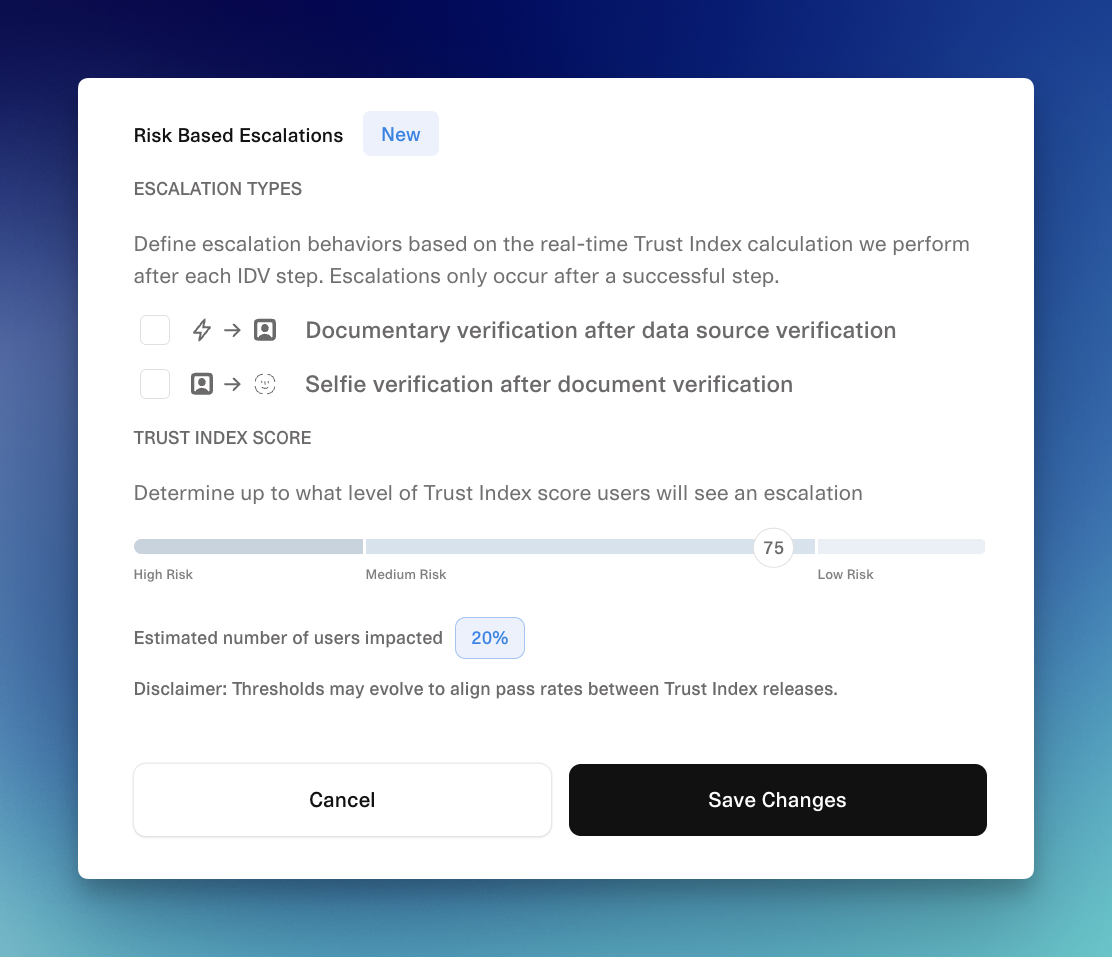
0–49: High Risk
50–74: Medium Risk
75–100: Low Risk
You can customize the threshold at which users get escalated. For example, setting the Trust Index threshold at 65 means anyone scoring below that will be prompted to complete additional verification (like a selfie check).
Disclaimer: Trust Index thresholds may evolve over time as Plaid refines the scoring system. We recommend monitoring performance and adjusting thresholds periodically to ensure consistency with your risk strategy.
Best Practice Recommendations
Most institutions set their Trust Index threshold between 60–70, depending on how much risk they’re willing to tolerate:
Risk Appetite | Suggested Threshold | Escalation Rate (Est.) |
Low risk, more friction | 70–75 | ~20–25% of users |
Balanced | 65 | ~10–15% of users |
High risk, less friction | 60 | ~5–10% of users |
If you’re observing increased fraud, we recommend adjusting your threshold upward (e.g. from 65 to 70) to escalate more users into additional verification.
On the other hand, if your fraud rates are low and stable, you can consider lowering the threshold slightly to reduce friction and improve conversion.
Using the Trust Index in Practice
Plaid has introduced a new UI within the Identity Verification dashboard that makes it easier to view Trust Index scores, understand individual risk factors, and take action based on user risk profiles.
With this updated interface, you can:
See a user’s overall Trust Index score immediately after each step
View individual signal scores contributing to the overall risk rating
Customize escalation thresholds directly in the UI
Manually label sessions to improve fraud detection over time
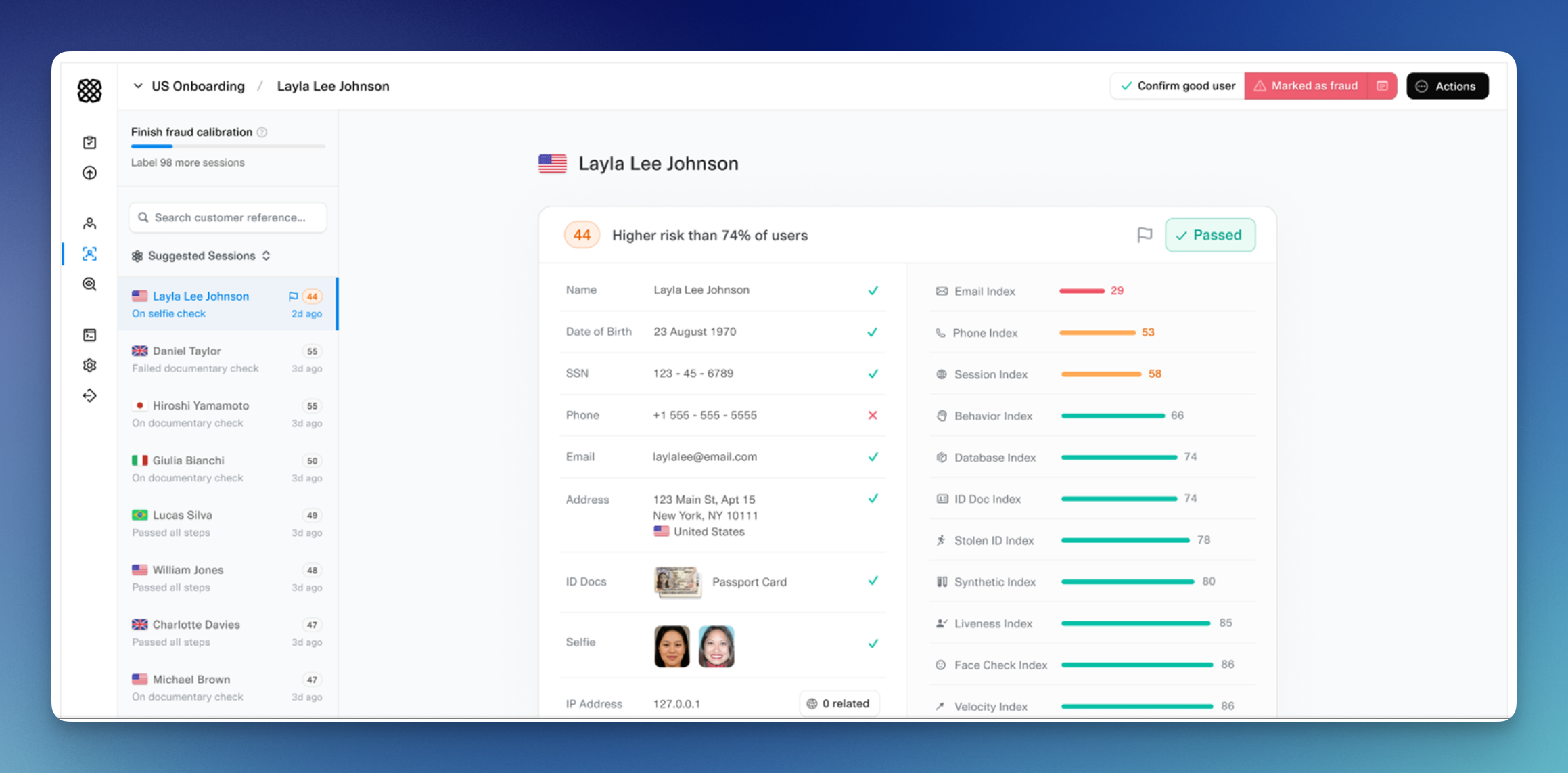
Using this interface alongside session labeling will help you continuously fine-tune your fraud thresholds and optimize your IDV flow for both security and conversion.
Adaptive Tuning with Labels
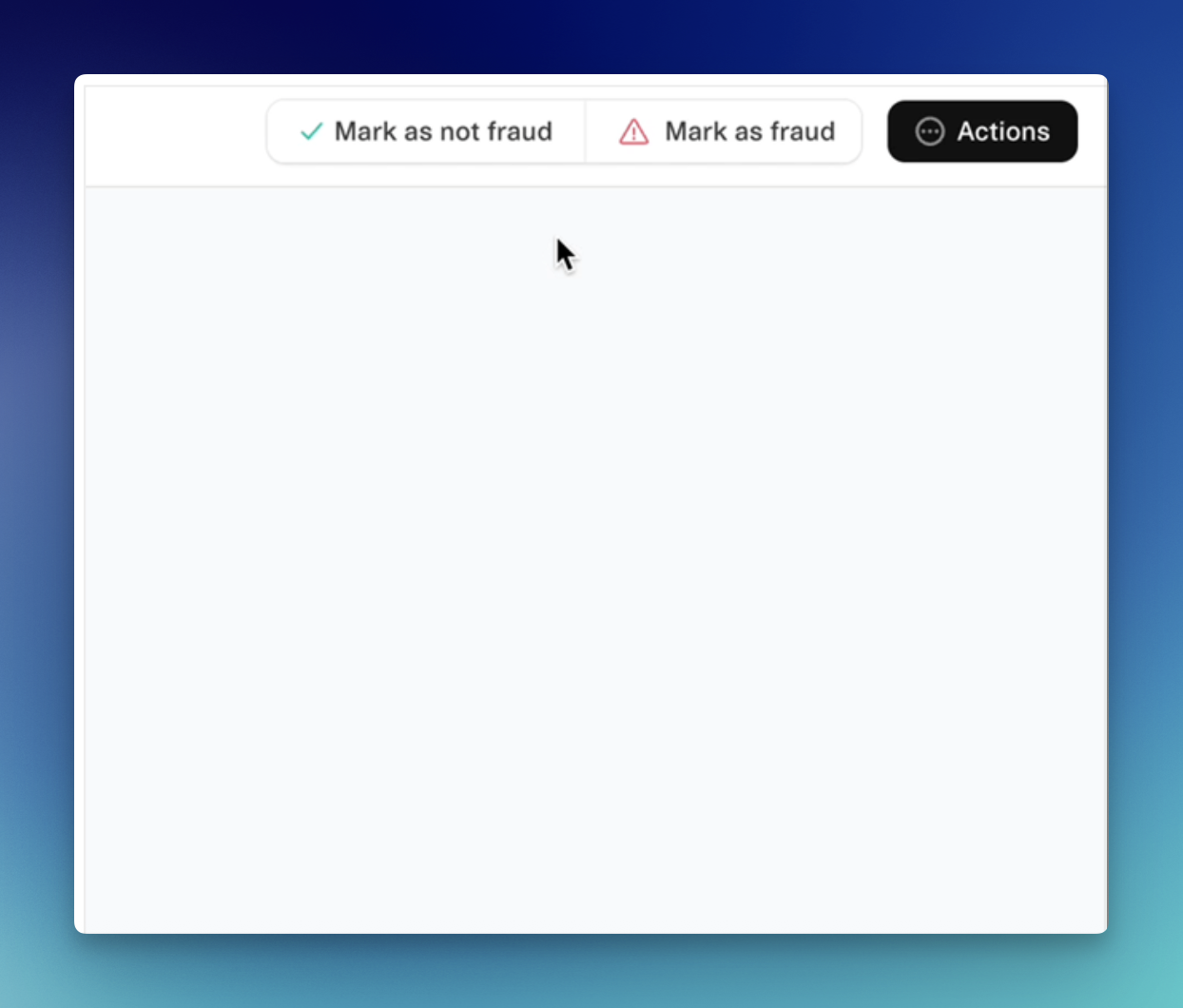
Plaid also supports fraud labeling — if you flag past sessions as fraud or legitimate, Plaid will adjust and optimize your thresholds over time. This means better pass rates and lower false positives, tailored to your institution’s real-world patterns.
We recommend starting to label sessions early to take full advantage of Plaid’s upcoming automated risk tuning capabilities.
Summary
The Trust Index is a powerful tool that helps you balance fraud prevention with a smooth user experience. By setting your escalation threshold thoughtfully and regularly reviewing flagged sessions, you can minimize drop-offs while still catching high-risk users.
Need help configuring your Trust Index settings? Reach out to our support team — we’re happy to help!